A Green councillor has posted videos of himself driving a Lamborghini supercar just days after winning a seat in the local elections. Baggy Khan, 25, took to Instagram to share snaps in a bright orange Lamborghini Huracán Spyder at a wedding despite campaigning for a party that pledges to remove petrol and diesel cars from the roads.
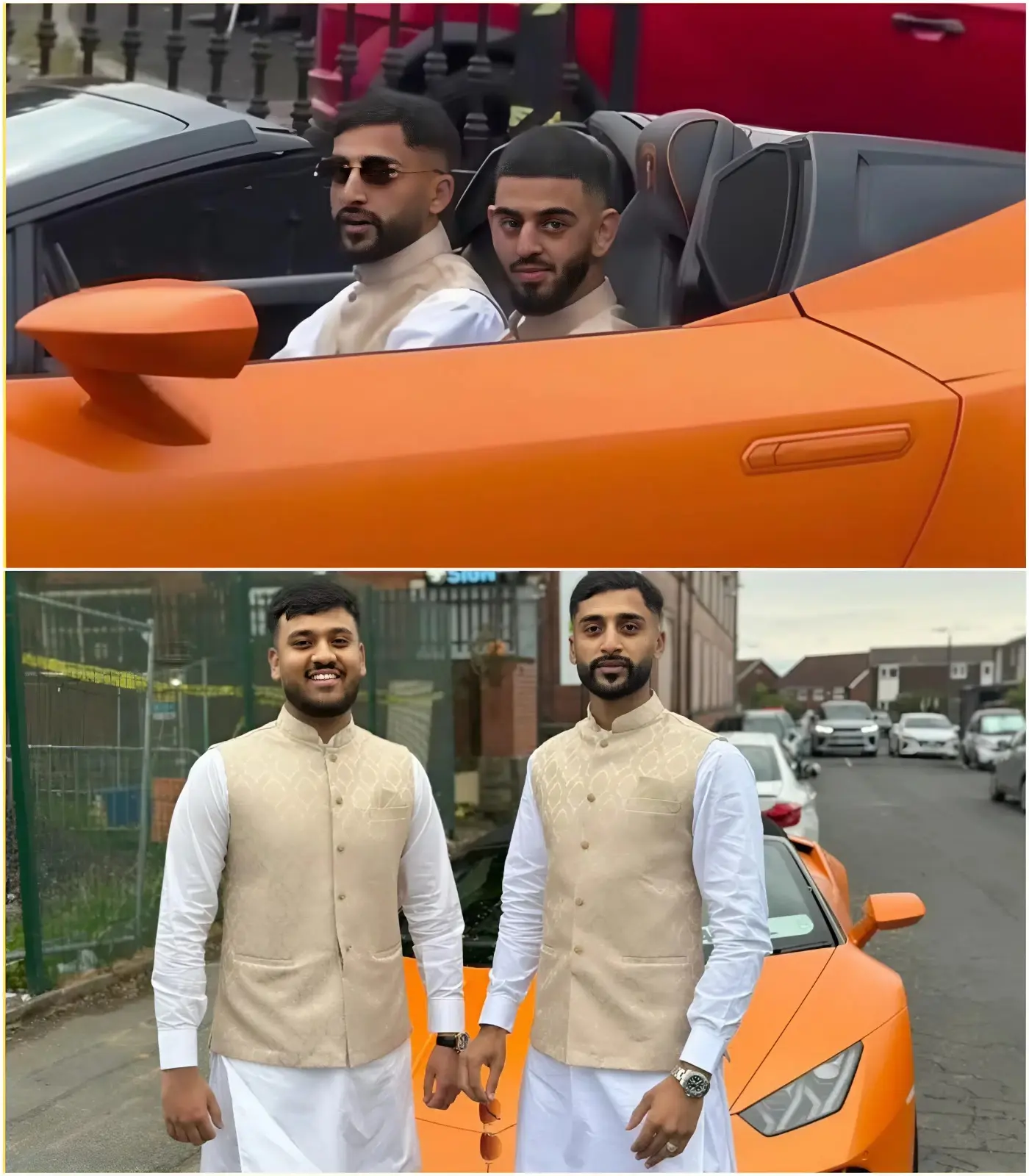
The images and videos, which quickly circulated online, have triggered a storm of criticism and accusations of hypocrisy against the newly elected representative. The supercar, which typically sells new for more than £200,000, is known for its eye-watering fuel consumption of around 15 miles per gallon — less than half the efficiency of an average British road car. Powered by a thunderous 5.2-litre V10 engine capable of reaching 200mph, the Lamborghini stands in stark contrast to the Green Party’s aggressive environmental agenda, which demands a rapid transition away from fossil-fuel vehicles.

Mr Khan was elected to the Halliwell ward of Bolton Council with 1,752 votes in last week’s local elections, contributing to the Green Party’s national gain of seats and bringing their total to 587 councillors. His campaign material and public messaging, however, largely sidelined traditional ecological policies. Instead, the focus was heavily placed on the situation in Palestine, aligning with a broader shift within the party under new leadership.

On his Instagram account, which boasts over 15,000 followers, Mr Khan is frequently seen posing next to luxury vehicles. A recurring feature is a Mercedes fitted with a personalised number plate, further amplifying perceptions of a lifestyle at odds with the party’s core values of sustainability and reduced consumption. The latest posts from the wedding celebration show him behind the wheel of the bright orange Huracán Spyder, smiling and enjoying the high-performance machine in full view of his audience.
Social media users were quick to highlight the apparent contradiction. One commenter wrote: “Looks very Green!! NOT! What a joke!!” Another added: “Green Party campaigning against billionaires and driving a Lambo.” A third simply asked: “Apparently, this man is a Green councillor, is that right?” The backlash has been swift and widespread, with many questioning how a representative of an environmentalist party can reconcile such displays of conspicuous consumption with policies that penalise ordinary motorists.
The Green Party advocates a zero-emissions transport strategy that would heavily restrict, penalise, and ultimately phase out fossil-fuelled vehicles. The party’s manifesto calls for all new cars, vans, motorbikes, and scooters sold in the UK to be zero-emission by 2027, with a full ban on petrol and diesel cars from UK roads by 2035. It also pushes for a significant shift away from private car ownership toward public transport, cycling, and walking. In this context, images of a Green councillor enjoying a gas-guzzling supercar have been seized upon as emblematic of a deeper disconnect.
The controversy extends beyond personal lifestyle choices. The Green Party has faced intense scrutiny in recent months over its changing priorities. Under leader Zack Polanski, the party has been accused of moving away from its traditional ecological roots toward identity politics and sectarian campaigning, particularly around the issue of Gaza. This strategic pivot has drawn sharp criticism from across the political spectrum. Prime Minister Sir Keir Starmer publicly condemned the Greens for engaging in “divisive, sectarian politics” following their by-election victory in Gorton and Denton earlier this year.
In a formal letter to Labour MPs, he warned that the party was mimicking George Galloway’s faith-based campaigning style and was “not the harmless environmentalists they pretend to be.”
Reform UK leader Nigel Farage has been equally vocal, branding Green successes in areas with large Muslim populations as the result of “sectarian voting and cheating.” He has raised concerns about democratic integrity, including alleged instances of “family voting.” These criticisms have placed the Green Party under a microscope, with Baggy Khan’s social media activity now providing fresh ammunition for detractors.
Adding fuel to the fire, Mr Khan has also faced criticism over a separate video that appears to show him filming on his phone while driving. The 25-year-old has strongly denied any wrongdoing, stating: “I am confident that I will be able to prove that I am not guilty of breaking the law. Anyone who knows me will know that I am a clean-cut young man with no criminal record. I give respect to all and am often involved in helping and mediating in the community.”
He further defended himself by accusing Labour of attempting to smear him. “Labour have framed their story in a fashion to try and tar me with the same brush as those irresponsible drivers who drive at crazy speeds and film themselves whilst putting others at risk, which is absolutely not the case here. I got into politics to help my local communities and to represent young people in politics as many are disenfranchised with the gutter politics that have been carrying on for years.”
The Green Party has confirmed it is internally investigating the incident. Greater Manchester Police have also been contacted for comment regarding the allegations of driving while using a mobile phone. Mr Khan, the Green Party, and the police had not issued further statements at the time of writing.
The episode has highlighted growing tensions within the Green movement. While the party continues to attract support from voters concerned about climate change, housing, and social justice, its recent electoral focus on international issues has alienated some traditional supporters. Gains in certain wards, particularly those with significant Muslim communities, have been notable, but they have also invited accusations that environmental priorities are being de-emphasised in favour of identity-driven campaigns.
For Bolton Council and the residents of Halliwell ward, the controversy arrives at a sensitive time. Local issues such as housing, cost of living, and community safety remain pressing concerns. Voters who supported Mr Khan may now be wondering whether his personal choices align with the values they endorsed at the ballot box. Others see the story as symptomatic of a wider trend in modern politics, where image and messaging sometimes clash with personal behaviour.
As the scrutiny intensifies, Baggy Khan’s rapid rise from relatively unknown activist to elected councillor has thrust him into the national spotlight. At just 25 years old, he represents a new generation of politicians seeking to engage younger and more diverse voters. Yet the Lamborghini posts risk undermining the very credibility his party seeks to build on environmental issues.
The broader Green Party finds itself at a crossroads. With local election successes tempered by internal questions and external criticism, its leadership must decide whether to double down on its current direction or recalibrate toward its ecological foundations. For Mr Khan personally, the coming weeks will be defining. He must navigate the backlash while attempting to prove himself as an effective local representative.
In an era where every social media post is subject to immediate public judgment, the case of the Green councillor and his Lamborghini serves as a potent reminder of the challenges facing politicians who champion radical change. The bright orange supercar, gleaming at a wedding celebration, has become an unlikely symbol of the gap between political rhetoric and personal reality. As public outrage continues and investigations proceed, many will be watching closely to see how this chapter unfolds for both the young councillor and the party he represents.